
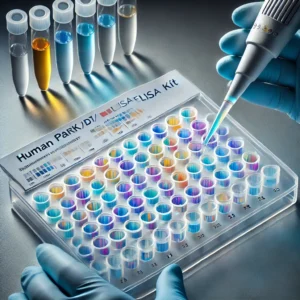
The Human PARK7 (DJ-1) ELISA Kit is a cutting-edge tool for detecting and quantifying PARK7 protein levels in various biological samples, such as serum, plasma, cerebrospinal fluid (CSF), and cell culture supernatants. The PARK7 protein, also known as DJ-1, has gained prominence as a biomarker in neurodegenerative diseases, including Parkinson’s Disease (PD), and as a key player in oxidative stress, mitochondrial function, and cellular homeostasis.
This guide will delve deeper into the applications, advantages, and workflow of the PARK7 ELISA kit, providing a comprehensive understanding of its utility in both research and clinical contexts.
What is PARK7/DJ-1, and Why is it Important?
PARK7/DJ-1 is a multifunctional protein that plays a critical role in protecting cells from oxidative stress, which is a key factor in neurodegenerative diseases like Parkinson’s Disease. Mutations in the PARK7 gene are linked to autosomal recessive early-onset PD, underscoring its importance in disease mechanisms.
The protein’s primary functions include:
- Oxidative Stress Regulation: DJ-1 acts as a scavenger of reactive oxygen species (ROS), protecting neurons from oxidative damage.
- Mitochondrial Function: It maintains mitochondrial integrity, which is crucial for neuronal energy metabolism.
- Neuroprotection: DJ-1 helps regulate cell survival pathways, offering protection against stress-induced apoptosis.
Learn more about the biological role of DJ-1 from the National Institute on Aging (NIA).
Applications of the PARK7 ELISA Kit
The PARK7 ELISA kit has a wide range of applications in basic and applied research:
- Parkinson’s Disease Research
- Biomarker Discovery: DJ-1 is considered a promising biomarker for Parkinson’s Disease due to its role in neuroprotection and its altered levels in patients.
- Disease Mechanism Studies: By measuring PARK7 levels, researchers can gain insights into oxidative stress and mitochondrial dysfunction, two critical processes in PD pathology.
- Explore the latest research on PARK7 and PD biomarkers at Michael J. Fox Foundation.
- Neurodegenerative Disease Studies
- PARK7 is implicated in other neurodegenerative disorders such as Alzheimer’s Disease, Amyotrophic Lateral Sclerosis (ALS), and Huntington’s Disease.
- Learn more about PARK7’s broader role in neurodegeneration at Alzheimer’s Association.
- Oxidative Stress and Cellular Aging
- DJ-1 is a critical regulator of oxidative stress, making this kit valuable for studying the effects of aging and oxidative damage in cells.
- Therapeutic Development
- The PARK7 ELISA kit is often used to evaluate the efficacy of neuroprotective drugs targeting oxidative stress pathways.
- Cancer Research
- DJ-1 has been implicated in cancer biology, particularly in regulating tumor suppressor proteins. The kit can be used to study DJ-1’s role in oncogenesis.
Features of the Human PARK7 ELISA Kit
- High Sensitivity and Specificity
- The kit can detect low levels of PARK7 in a wide range of biological samples, with minimal cross-reactivity.
- Sensitivity ranges from 10–100 pg/mL, depending on the specific assay design.
- Rapid and Reliable Results
- Provides results within 3–4 hours, making it ideal for high-throughput screening and time-sensitive studies.
- Broad Sample Compatibility
- Works with human serum, plasma, CSF, and tissue lysates, allowing for versatile experimental designs.
- Ease of Use
- Pre-coated plates and ready-to-use reagents simplify the workflow, making the kit accessible to researchers with varying levels of expertise.

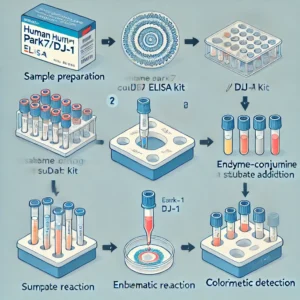
ELISA Workflow: How the PARK7 Kit Works
- Sample Preparation
- Collect and prepare biological samples such as serum, plasma, or CSF. Dilute samples as needed to fit within the assay’s detection range.
- Binding Phase
- Add the sample to wells pre-coated with anti-PARK7 capture antibodies. Incubate to allow PARK7 binding.
- Detection Phase
- Add enzyme-linked secondary antibodies that specifically bind to the captured PARK7.
- Color Development
- Add a chromogenic substrate like TMB (3,3′,5,5′-Tetramethylbenzidine) or OPD. The enzyme reacts with the substrate to produce a color change.
- Measurement
- Read the optical density at 450 nm using a microplate reader. The intensity of the color is proportional to the PARK7 concentration in the sample.
For detailed instructions, refer to protocols from the Centers for Disease Control and Prevention (CDC).
Clinical Relevance of PARK7
- Early Diagnosis of Parkinson’s Disease
- DJ-1 levels are altered in the serum and CSF of Parkinson’s patients, offering potential for early diagnosis. Studies show that reduced PARK7 levels may correlate with disease severity.
- Learn more about early diagnosis techniques from the Parkinson’s Foundation.
- Disease Monitoring
- Serial measurements of PARK7 can provide insights into disease progression and the effectiveness of therapeutic interventions.
- Biomarker for Therapeutic Trials
- The PARK7 ELISA kit is frequently used in clinical trials to monitor biomarker changes in response to treatment.
Storage and Stability
- Store the kit components at 2–8°C for optimal stability.
- Protect the enzyme conjugates and substrates from light to prevent degradation.
- Reconstituted reagents should be used immediately or stored according to the manufacturer’s instructions.
For reagent handling and storage tips, visit the Environmental Protection Agency (EPA).
Frequently Asked Questions (FAQs)
- What is the detection range of the kit?
- The kit typically detects PARK7 concentrations in the range of 10–500 ng/mL, depending on the sample and experimental conditions.
- Can this kit be used with animal samples?
- While the kit is optimized for human samples, some versions may be cross-reactive with other species. Check with the manufacturer for compatibility.
- How long does the assay take?
- The entire procedure takes approximately 3–4 hours, including incubation and washing steps.
- What if my samples are below the detection limit?
- Concentrate your samples using ultrafiltration techniques or increase the sample volume during the assay.
For more troubleshooting tips, consult the National Institutes of Health (NIH).
Advancements in PARK7 Research
- Emerging Biomarkers
- Researchers are exploring DJ-1 in combination with other biomarkers like α-synuclein and UCH-L1 for a more comprehensive PD diagnostic panel.
- Therapeutic Targets
- Novel therapies aimed at modulating DJ-1 levels or activity are under investigation, offering hope for PD treatment.
- Machine Learning in Biomarker Analysis
- AI-based approaches are being developed to analyze PARK7 levels alongside clinical data for improved diagnostic accuracy.
For the latest advancements in biomarker research, visit PubMed Central.
Conclusion
The Human PARK7/DJ-1 ELISA Kit is a versatile, reliable, and indispensable tool for studying oxidative stress, mitochondrial dysfunction, and neurodegenerative diseases like Parkinson’s Disease. By enabling precise quantification of PARK7 levels, this kit supports groundbreaking research in early diagnosis, disease progression monitoring, and therapeutic development.
For purchasing options or further technical details, consult trusted suppliers such as Thermo Fisher Scientific and Abcam.