
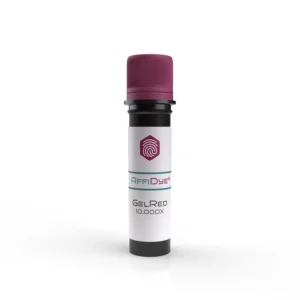
GelRed is a superior fluorescent nucleic acid stain, widely used in molecular biology for the detection of DNA and RNA in agarose or polyacrylamide gels. Supplied as a concentrated solution (10,000X), it is designed to offer exceptional sensitivity, high stability, and a safer alternative to ethidium bromide (EtBr). This article delves into the chemistry, applications, and safety benefits of GelRed, along with its role in modern molecular biology.
Overview of GelRed: Chemistry and Advantages
GelRed is a water-soluble dye that binds tightly to nucleic acids, enabling researchers to visualize DNA and RNA under UV or blue light. Unlike traditional stains such as EtBr, GelRed is non-mutagenic and non-carcinogenic, as supported by National Institutes of Health (NIH) studies.
Key Advantages:
- High Sensitivity: GelRed detects even low concentrations of nucleic acids, comparable to or better than EtBr, as detailed by NCBI.
- Safer Handling: Designed to be non-hazardous, GelRed does not require special disposal procedures mandated by the Environmental Protection Agency (EPA).
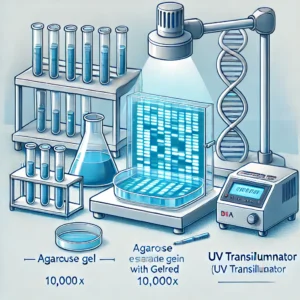
- Compatibility: Works seamlessly with standard gel electrophoresis protocols and UV transilluminators, a feature validated by the Centers for Disease Control and Prevention (CDC).
Applications of GelRed in Molecular Biology
1. Agarose Gel Electrophoresis
GelRed is widely used in agarose gel electrophoresis for visualizing DNA fragments. It can be incorporated directly into the gel or used as a post-stain. The Food and Drug Administration (FDA) highlights its utility in diagnostics and research labs.
2. Polyacrylamide Gel Electrophoresis (PAGE)
For applications requiring high-resolution nucleic acid separation, such as detecting small RNA species, GelRed is ideal due to its strong fluorescence and low background noise. Researchers at NIH recommend it for RNA analysis in structural biology studies.
3. PCR and RT-PCR Validation
GelRed facilitates the confirmation of amplification products in polymerase chain reactions (PCR) and reverse transcription-PCR (RT-PCR). According to the CDC, this is crucial for accurate molecular diagnostics.
4. Southern and Northern Blotting
In hybridization assays, GelRed-stained gels provide clear and reliable visualization of target nucleic acids, as described in resources from the National Human Genome Research Institute (NHGRI).
5. Educational Use
Due to its safety profile, GelRed is an excellent choice for teaching molecular biology techniques in academic settings, as endorsed by the U.S. Department of Education.
Safety Profile of GelRed: A Non-Mutagenic Alternative
Ethidium bromide has long been a staple in nucleic acid staining, but its mutagenic properties raise significant safety concerns. GelRed addresses these issues, offering a safer alternative without compromising performance.
Evidence of Non-Toxicity:
- Mutagenicity Tests: GelRed has been shown to be non-mutagenic in the Ames test, a standard assay for mutagenicity evaluation, as noted by PubMed.
- Biodegradability: Its water-soluble nature ensures easy disposal without environmental harm, in line with EPA regulations.
- Safe Usage in Teaching Labs: The National Science Foundation (NSF) recommends GelRed for undergraduate and graduate molecular biology courses.
Protocol for Using GelRed
Direct Gel Staining:
- Add GelRed (10,000X) to molten agarose at a final concentration of 1X.
- Pour the gel into a casting tray and allow it to solidify.
- Load DNA samples and run the gel using standard electrophoresis conditions.
- Visualize under UV or blue light.
Post-Staining:
- Submerge the gel in a staining solution containing diluted GelRed (1X).
- Incubate for 30 minutes at room temperature.
- Wash briefly with water to reduce background fluorescence before imaging.
Detailed protocols can be found in instructional materials provided by NIH.
Comparison with Ethidium Bromide
| Feature | GelRed | Ethidium Bromide |
|---|---|---|
| Sensitivity | High | Moderate |
| Safety | Non-mutagenic | Mutagenic |
| Disposal Requirements | Standard (non-hazardous) | Special (hazardous waste) |
| Fluorescence Intensity | Superior | Moderate |
According to the National Cancer Institute (NCI), transitioning to safer dyes like GelRed is critical for reducing laboratory hazards.

Advanced Research Applications
- Genome Editing Studies: GelRed is ideal for validating CRISPR/Cas9 editing outcomes, a rapidly growing field supported by NIH.
- Epigenetic Research: Used in detecting DNA methylation patterns, as highlighted by NCBI.
- Next-Generation Sequencing (NGS): GelRed aids in quality control of nucleic acid libraries before sequencing, in line with FDA recommendations.
Conclusion
The GelRed (10,000X) dye has revolutionized nucleic acid staining, offering a highly sensitive, safer, and eco-friendly alternative to traditional stains. Its versatility across multiple applications makes it indispensable for researchers and educators alike. For more information, explore resources from CDC, FDA, and NIH.
Let me know if you’d like to expand on specific sections or include additional technical details!