
Introduction
Cell viability and proliferation assays are essential tools in biomedical research, particularly in cytotoxicity testing, drug screening, and cell growth analysis. Cell Counting Kit-8 (CCK-8) is one of the most widely used colorimetric assays for quantifying cell viability, utilizing WST-8, a water-soluble tetrazolium salt. This article explores the principles, applications, advantages, and limitations of CCK-8 while incorporating authoritative references from government and educational sources.
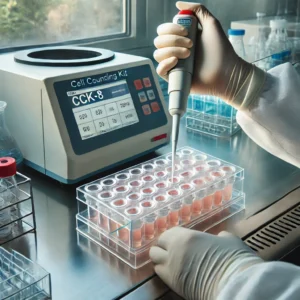
Principle of the CCK-8 Assay
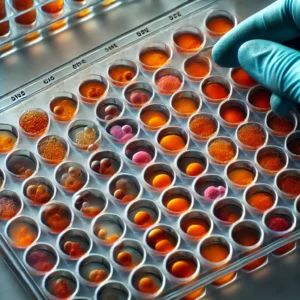
CCK-8 works based on a tetrazolium salt reduction reaction, where metabolically active cells reduce WST-8 to an orange-colored formazan dye. The intensity of the color correlates with the number of viable cells and is quantified using absorbance at 450 nm.
The reaction occurs as follows:
- WST-8 is reduced by cellular dehydrogenases in viable cells.
- The reduction produces a water-soluble formazan dye.
- The amount of formazan formed is directly proportional to the number of living cells (NIH, NCI).
Applications of CCK-8
CCK-8 is widely employed in various research fields, including:
- Cancer Research – Evaluating cytotoxic effects of drugs on cancer cells (National Cancer Institute)
- Drug Discovery – Screening small molecules for potential therapeutic activity (FDA)
- Toxicology Studies – Assessing environmental and pharmaceutical compound toxicity (EPA)
- Stem Cell Research – Measuring cell proliferation during differentiation (NIH)
- Neuroscience – Studying neuronal viability and neuroprotective compounds (NINDS)
Advantages of CCK-8 Over Other Assays
CCK-8 is favored over other tetrazolium-based assays (such as MTT and XTT) due to its higher sensitivity and water solubility. Key advantages include:
- No solubilization step required (unlike MTT, which requires DMSO for formazan solubilization) (PubMed)
- Higher stability and lower toxicity compared to MTT, XTT, and MTS (CDC)
- Faster reaction time and reduced interference from phenol red-containing media (NIH)
- Broad applicability across various cell lines and research areas (FDA), (WHO).
Limitations and Considerations
While CCK-8 is an excellent choice for many applications, researchers should be aware of its limitations:
- Interference from highly reducing agents may affect absorbance readings.
- Variability among different cell types – Optimization may be required (NIH).
- Metabolically inactive cells may not be detected, even if they are structurally intact (EPA).
Best Practices for Using CCK-8
To obtain reliable and reproducible results, follow these best practices:
- Optimize cell density to ensure absorbance is within the linear detection range.
- Control for background absorbance by including a blank well with only medium and CCK-8 reagent.
- Ensure uniform incubation time to avoid inconsistencies in formazan production.
- Store reagents properly to prevent degradation and ensure assay accuracy (NIH).
Comparison with Other Cell Viability Assays
CCK-8 is commonly compared to other viability assays, including MTT, XTT, and Alamar Blue:
| Assay | Solubility | Sensitivity | Toxicity | Detection Wavelength |
|---|---|---|---|---|
| CCK-8 | Water-soluble | High | Low | 450 nm |
| MTT | Requires solubilization | Moderate | High | 570 nm |
| XTT | Water-soluble | Moderate | Moderate | 475 nm |
| Alamar Blue | Water-soluble | High | Low | 570 nm |
| (CDC, NIH) |

Conclusion
Cell Counting Kit-8 (CCK-8) is a powerful, reliable, and efficient tool for cell viability and proliferation studies. Its high sensitivity, ease of use, and compatibility with multiple cell lines make it a preferred choice in biomedical research. However, researchers must consider potential interfering factors and assay limitations to ensure accurate results. By adhering to best practices and using appropriate controls, CCK-8 can provide highly reproducible and quantitative insights into cellular health.
For additional resources and information, visit:
- National Institutes of Health (NIH)
- Centers for Disease Control and Prevention (CDC)
- Food and Drug Administration (FDA)
- Environmental Protection Agency (EPA)
- World Health Organization (WHO)
CCK-8 continues to be a valuable tool in various fields of life sciences, drug discovery, and toxicology, aiding researchers in advancing biomedical knowledge and therapeutic development.