
Introduction
In modern syndromic diagnostics, where dozens of pathogens can be tested in a single multiplex PCR panel, the accuracy of results becomes just as critical as the speed of detection. The QIAstat-Dx® system (QIAGEN) is a widely adopted sample-to-answer molecular platform designed to test for pathogens associated with respiratory infections, gastrointestinal diseases, and central nervous system (CNS) infections such as meningitis and encephalitis.
Given the clinical impact of a “Not Detected” result, robust internal control mechanisms are integrated into every QIAstat-Dx® cartridge. These controls verify that each step of the workflow—from sample lysis, nucleic acid extraction, amplification, and detection—has functioned correctly. Without them, false negatives could arise from technical failures or PCR inhibition, potentially leading to misdiagnosis or inappropriate treatment decisions.
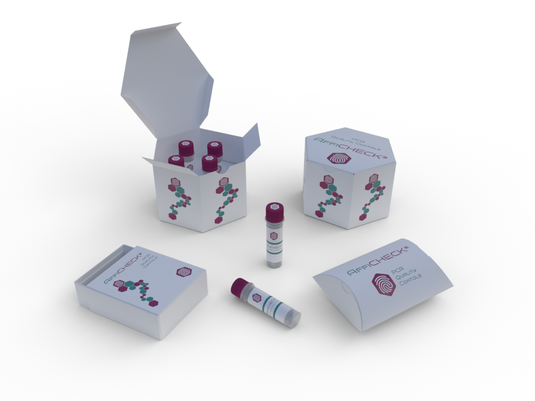
Overview of Internal Controls
Internal controls serve as built-in quality monitors, ensuring that assay performance can be interpreted with confidence. The QIAstat-Dx® platform incorporates two complementary types of controls:
-
Sample Processing Control (SPC) – monitors nucleic acid extraction and confirms that the physical and chemical processes in the cartridge are functioning correctly.
-
Assay-Specific Internal Controls – evaluate amplification efficiency and detect PCR inhibition that could interfere with pathogen detection.
Together, these layers of verification reduce the risk of reporting false negatives and strengthen the reliability of the test across varied sample types.
Sample Processing Control (SPC)
Principle
The SPC is an exogenous nucleic acid sequence added to the cartridge during sample processing. It is not found in human clinical samples, and therefore its detection does not interfere with pathogen results.
Workflow Monitoring
The SPC undergoes the same steps as the pathogen targets:
-
Cell lysis in the cartridge chamber.
-
Nucleic acid extraction using bead-based or membrane-based chemistry.
-
Amplification with real-time PCR.
-
Fluorescent detection via optical sensors in the instrument.
A successful SPC signal confirms that:
-
The sample was processed correctly.
-
Nucleic acid extraction yielded material suitable for PCR.
-
No catastrophic failure occurred in the cartridge.
Implications of SPC Failure
If the SPC does not amplify, the system issues an “Invalid” result. Causes may include:
-
Ineffective sample lysis or nucleic acid recovery.
-
Expired or defective cartridge reagents.
-
Incorrect instrument operation.
-
Severe sample degradation.
An invalid run prompts repeat testing, preventing clinicians from relying on potentially inaccurate results.
Assay-Specific Internal Controls
Function
Each pathogen-specific PCR reaction includes internal probe-based controls that track amplification efficiency. These confirm that the polymerase and thermal cycling conditions are functioning as expected.
Detection of PCR Inhibition
Clinical specimens often contain compounds that inhibit PCR enzymes, such as:
-
Respiratory samples – mucus, hemoglobin from minor bleeding, or topical medications.
-
Stool samples – bile salts, complex polysaccharides, fats, or bacterial metabolites.
-
Cerebrospinal fluid (CSF) – elevated protein, blood contamination, or preservatives.
Internal controls ensure that if amplification fails due to these inhibitors, the system flags the problem rather than reporting a false “Not Detected” result.
Amplification Curve Monitoring
By examining the shape, slope, and cycle thresholds (Ct values) of internal controls, the QIAstat-Dx® software can detect reduced efficiency and differentiate between a true negative and a technically compromised run.
Technical Role of Controls in Workflow Reliability
Internal controls act as sentinels at multiple stages of the QIAstat-Dx® workflow:
-
Extraction efficiency – SPC confirms recovery of nucleic acids.
-
Amplification integrity – internal controls verify that PCR kinetics are functional.
-
Inhibition detection – assay controls highlight interfering substances that mask pathogen detection.
-
System verification – overall performance of cartridge chemistry and optical detection is validated with every run.
This multi-layer design ensures that clinicians can trust negative results, which is often more clinically significant than a positive call.
Applications in Clinical Panels
Respiratory Panel
-
Commonly used for detecting pathogens like SARS-CoV-2, influenza A/B, RSV, adenovirus, and coronaviruses.
-
Respiratory samples vary widely in viscosity, making nucleic acid recovery challenging.
-
SPC confirmation ensures that mucus-rich samples still produce valid results.
Gastrointestinal Panel
-
Targets include rotavirus, norovirus, Salmonella, Shigella, Campylobacter, and others.
-
Stool is one of the most PCR inhibitor-rich matrices.
-
Assay controls are critical to avoid missed detections of highly contagious pathogens like norovirus.
Meningitis/Encephalitis (ME) Panel
-
Detects pathogens such as Neisseria meningitidis, Haemophilus influenzae, HSV, VZV, and enteroviruses.
-
CSF often has low pathogen loads, making false negatives particularly dangerous.
-
SPC helps confirm that even low-volume CSF samples yield reliable extraction and amplification.
Clinical Relevance: Minimizing False Negatives
A false negative in syndromic testing can have profound consequences:
-
Respiratory infections – undetected influenza or SARS-CoV-2 may lead to uncontrolled nosocomial spread.
-
Gastrointestinal outbreaks – failure to detect norovirus or Salmonella can prolong outbreaks in hospitals or care facilities.
-
CNS infections – missing bacterial meningitis or HSV encephalitis can delay life-saving interventions.
By incorporating both SPC and assay-specific controls, QIAstat-Dx® provides evidence-backed confidence in every negative report, allowing clinicians to make safe, data-driven decisions.
Broader Laboratory Impact
Internal controls do more than prevent false negatives; they also:
-
Standardize workflows – every test run is automatically checked for quality, reducing inter-operator variability.
-
Support accreditation compliance – internal controls meet requirements for laboratory quality management systems (e.g., ISO 15189, CLIA).
-
Reduce repeat testing costs – invalid runs are identified early, minimizing wasted resources.
-
Build clinician trust – consistent performance reinforces confidence in multiplex syndromic panels compared to singleplex assays.
Future Perspectives
As molecular diagnostic platforms continue to evolve:
-
Quantitative internal controls may allow labs to monitor not just pass/fail performance but also relative extraction and amplification efficiency.
-
Artificial intelligence (AI) algorithms could analyze control performance across thousands of runs to predict cartridge performance and pre-empt failure.
-
Expanded inhibition profiling may help laboratories understand which patient populations or specimen types are most prone to interference, leading to targeted pre-processing methods.
Conclusion
The reliability of multiplex molecular diagnostics hinges not just on advanced chemistry and detection, but also on robust internal control systems. The QIAstat-Dx® platform exemplifies this by combining:
-
Sample Processing Control (SPC) to verify extraction success.
-
Assay-specific internal controls to ensure amplification efficiency and detect inhibition.
Together, these safeguards provide confidence that negative results truly reflect the absence of a pathogen, rather than a technical failure. In high-risk panels such as respiratory, gastrointestinal, and meningitis/encephalitis testing, these internal controls are essential for protecting patient outcomes, guiding outbreak response, and supporting clinical decision-making.