
The COVID-19 pandemic has driven unprecedented advancements in biomedical research, particularly in the study of SARS-CoV-2 and its numerous variants. One of the latest innovations facilitating this research is the AffiASSAY® Mouse SARS-CoV-2 Omicron Subvariants Total IgG 5-plex Panel. This sophisticated tool enables researchers to measure the immune response against different Omicron subvariants in mouse models, providing critical insights into vaccine efficacy and immune response mechanisms. This article explores the features, applications, and significance of the AffiASSAY® panel while providing numerous resources for further exploration through academic and government websites.
Understanding the AffiASSAY® Mouse SARS-CoV-2 Omicron Subvariants Total IgG 5-plex Panel

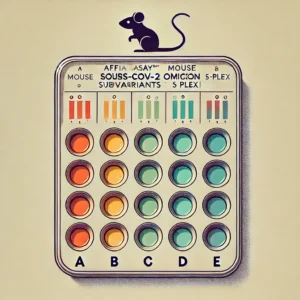
The AffiASSAY® Mouse SARS-CoV-2 Omicron Subvariants Total IgG 5-plex Panel is a multiplex assay designed for the simultaneous detection of total IgG antibodies against five distinct SARS-CoV-2 Omicron subvariants. This multiplexing capability is essential for understanding the immune landscape against the rapidly evolving virus. The assay’s high sensitivity and specificity make it a valuable tool for research in several key areas:
- Vaccine Development: The panel assists in evaluating the immunogenicity of vaccine candidates, helping to identify formulations that elicit broad and potent immune responses. More information on vaccine development and immunogenicity studies can be found at the Centers for Disease Control and Prevention (CDC) and National Institutes of Health (NIH).
- Therapeutic Research: It supports the development of monoclonal antibodies and antiviral therapies by providing precise measurements of immune responses to different variants. The U.S. Food and Drug Administration (FDA) offers detailed guidelines on the regulatory requirements for these therapeutics.
- Basic Immunological Research: The assay is instrumental in basic research to understand the mechanisms of immune response to SARS-CoV-2, especially in response to mutations in the spike protein of the virus. Researchers can explore fundamental immunological processes through resources provided by Harvard University’s Department of Immunology and the Yale School of Medicine.
Key Features and Advantages
The AffiASSAY® Mouse SARS-CoV-2 Omicron Subvariants Total IgG 5-plex Panel offers several distinct advantages:
- Multiplexing Capability: Allows for the concurrent detection of antibodies against five different Omicron subvariants, streamlining research workflows and reducing the amount of sample required.
- High Sensitivity and Specificity: Utilizes high-affinity reagents to ensure precise quantification of IgG antibodies, even at low concentrations. For more on assay sensitivity and specificity, visit the Johns Hopkins Bloomberg School of Public Health.
- Robust Quantitative Data: Provides quantitative data that is crucial for correlating with neutralizing activity and understanding the protective efficacy of immune responses. Learn more about neutralization assays at the University of California, San Francisco (UCSF) ImmunoX Initiative.
Applications in SARS-CoV-2 Research
The AffiASSAY® panel is utilized in a variety of research settings, including:
- Evaluating Vaccine-Induced Immunity: This panel is vital for assessing the breadth and durability of immune responses elicited by different vaccines. Resources for vaccine-induced immunity studies are available through the World Health Organization (WHO) and the National Institute of Allergy and Infectious Diseases (NIAID).
- Comparative Studies of SARS-CoV-2 Variants: The assay facilitates comparative analysis of immune responses to various Omicron subvariants, aiding in the understanding of variant-specific immunity. To explore more on variant research, refer to the European Centre for Disease Prevention and Control (ECDC).
- Monitoring Natural and Post-Infection Immunity: The panel helps track immune responses in mouse models post-SARS-CoV-2 infection, offering insights into natural immunity. For more on natural immunity and SARS-CoV-2, visit the University of Oxford’s Nuffield Department of Medicine and the Imperial College London’s COVID-19 Research Hub.
Recent Research Findings Utilizing the AffiASSAY® Panel
Recent studies using the AffiASSAY® panel have highlighted its utility in understanding the immune landscape against SARS-CoV-2. For instance:
- Assessment of Cross-Variant Immunity: Studies have shown the panel’s ability to detect cross-reactive antibodies, providing insights into potential gaps in immunity. This research is crucial for vaccine updates and can be explored further through the University of Cambridge Department of Immunology.
- Immune Response to Emerging Subvariants: The panel has been used to study the immune response to newly emerging Omicron subvariants, helping predict future trends in vaccine efficacy. Detailed findings are available at the University of Washington’s Institute for Health Metrics and Evaluation (IHME).
- Implications for Public Health: By understanding the breadth of immune responses to different subvariants, public health policies can be better informed. Additional information on the public health implications of SARS-CoV-2 variants can be found on the Public Health Agency of Canada (PHAC) and Australian Department of Health.
Future Directions and Research Opportunities

The continued use of the AffiASSAY® panel is expected to expand our understanding of SARS-CoV-2 immune dynamics. Future research may focus on:
- Longitudinal Studies: Investigating the durability of immune responses over time, particularly in the context of booster vaccinations. Researchers can access longitudinal study data and protocols at the University of Michigan School of Public Health.
- Integration with Other Assays: Combining the AffiASSAY® panel with other immunoassays for a comprehensive analysis of both humoral and cellular immunity. The University of California, Los Angeles (UCLA) David Geffen School of Medicine offers insights into integrative approaches to immunological research.
- Impact of Host Factors on Immunity: Studying how factors such as age, sex, and comorbidities influence immune responses to SARS-CoV-2 variants. Resources on host-pathogen interactions can be found at the Rockefeller University and University of Toronto’s Department of Immunology.
Conclusion
The AffiASSAY® Mouse SARS-CoV-2 Omicron Subvariants Total IgG 5-plex Panel is a powerful tool that has become integral to SARS-CoV-2 research. Its ability to provide detailed insights into immune responses across various Omicron subvariants makes it indispensable for advancing our understanding of COVID-19 immunology and guiding the development of next-generation vaccines and therapeutics. For more information, researchers are encouraged to explore additional resources provided by academic institutions and government organizations.
By leveraging such advanced tools and resources, the scientific community can continue to make significant strides in combating the ongoing challenges posed by SARS-CoV-2 and its evolving variants.