
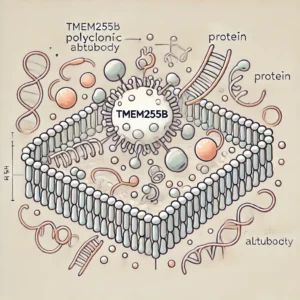
The TMEM255B Polyclonal Antibody is a specialized reagent essential for investigating TMEM255B, a transmembrane protein implicated in diverse cellular processes and disease pathways. With its high specificity and versatility, this antibody is instrumental in studying protein expression, localization, and functional roles in both normal and pathological conditions.
What is TMEM255B?
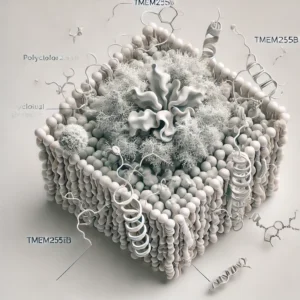
TMEM255B, or Transmembrane Protein 255B, is part of a broader family of transmembrane proteins involved in cellular signaling, molecular transport, and homeostasis. Its structure, characterized by hydrophobic domains spanning cellular membranes, allows it to mediate critical protein-protein and protein-lipid interactions. The protein is increasingly linked to regulatory pathways in cancer, neurodegeneration, and immune response, as highlighted in studies available at NCBI.
Importance of TMEM255B Research
1. Cancer Biology
TMEM255B has been identified as a potential biomarker for tumor progression and metastasis. Altered expression patterns in various cancers suggest its involvement in oncogenic signaling pathways, making it a target for cancer diagnostics and therapeutics. The National Cancer Institute provides resources on transmembrane proteins in oncology.
2. Neurodegenerative Diseases
TMEM255B is implicated in neurodegenerative conditions, potentially through its role in maintaining neuronal membrane stability and facilitating intracellular signaling. For further reading, see research supported by NIH Neuroscience.
3. Cellular Homeostasis
Transmembrane proteins like TMEM255B are key players in maintaining cellular equilibrium by mediating communication between intracellular and extracellular environments. Studies funded by NSF.gov have focused on the broader implications of such proteins in cellular homeostasis.
TMEM255B Polyclonal Antibody: Features and Benefits
- High Specificity: The antibody recognizes unique epitopes on TMEM255B, minimizing cross-reactivity with other proteins (PubMed).
- Versatile Applications: Validated for Western blot, immunohistochemistry (IHC), immunofluorescence (IF), and enzyme-linked immunosorbent assay (ELISA) (NIH.gov).
- Species Reactivity: Tested on human, mouse, and rat samples, ensuring broad usability in preclinical research (FDA.gov).

Applications in Research
1. Western Blot Analysis
Western blotting is a powerful technique to detect TMEM255B expression in cell or tissue lysates. The antibody binds specifically to TMEM255B, allowing for precise quantification of protein levels (Science.gov).
2. Immunohistochemistry (IHC)
In IHC, the TMEM255B Polyclonal Antibody helps localize the protein in tissue samples, revealing its spatial expression in pathological contexts. Best practices for IHC protocols are outlined by CDC.gov.
3. Immunofluorescence (IF)
The antibody is used in IF to visualize TMEM255B under a fluorescence microscope. This technique is invaluable for studying subcellular localization and protein-protein interactions (NSF.gov).
4. ELISA
ELISA-based detection of TMEM255B in biological fluids enables researchers to quantify protein levels under varying experimental conditions. Protocol guidelines for such assays can be found at EPA.gov.
Key Protocol Considerations
1. Sample Preparation
Proper sample preparation, including lysis and protein extraction, is critical for successful antibody use. Consult guidelines from NIST.gov for standard protocols.
2. Optimal Dilution
Titrate the antibody for specific applications to achieve the best signal-to-noise ratio. Resources like FDA.gov offer recommendations for reagent optimization.
3. Controls
Include positive and negative controls in your experiments to validate results. For more on experimental controls, see NIH Reagents.
Research Implications of TMEM255B
1. Biomarker Discovery
TMEM255B is emerging as a promising biomarker for cancer and neurodegeneration. Quantifying its expression using the antibody allows researchers to identify correlations with disease progression (Cancer.gov).
2. Drug Development
By targeting TMEM255B, researchers can explore potential therapeutic strategies for diseases where its expression is dysregulated. For clinical studies on related targets, visit ClinicalTrials.gov.
3. Understanding Cellular Mechanisms
The antibody facilitates research into TMEM255B’s role in intracellular signaling and membrane dynamics, contributing to the broader understanding of cellular biology (NIH Cell Biology).
Advantages of Using TMEM255B Polyclonal Antibody
- Rigorous Validation: Tested across multiple platforms to ensure reliability.
- High Reproducibility: Consistent results across experiments and replicates.
- Wide Applicability: Suitable for diverse biological systems and experimental setups.
Resources for Further Reading
- NCBI: https://www.ncbi.nlm.nih.gov/
- PubMed: https://pubmed.ncbi.nlm.nih.gov/
- NIH: https://www.nih.gov/
- ClinicalTrials.gov: https://clinicaltrials.gov/
- Cancer.gov: https://www.cancer.gov/
- NSF: https://www.nsf.gov/
- FDA.gov: https://www.fda.gov/
Conclusion
The TMEM255B Polyclonal Antibody is a pivotal tool in advancing research on TMEM255B, aiding in the understanding of its roles in cellular processes and diseases. With its high specificity, broad applications, and strong validation, this antibody serves as an indispensable resource for researchers. For additional information and protocol guidance, consult trusted resources like NIH.gov, PubMed, and Science.gov.